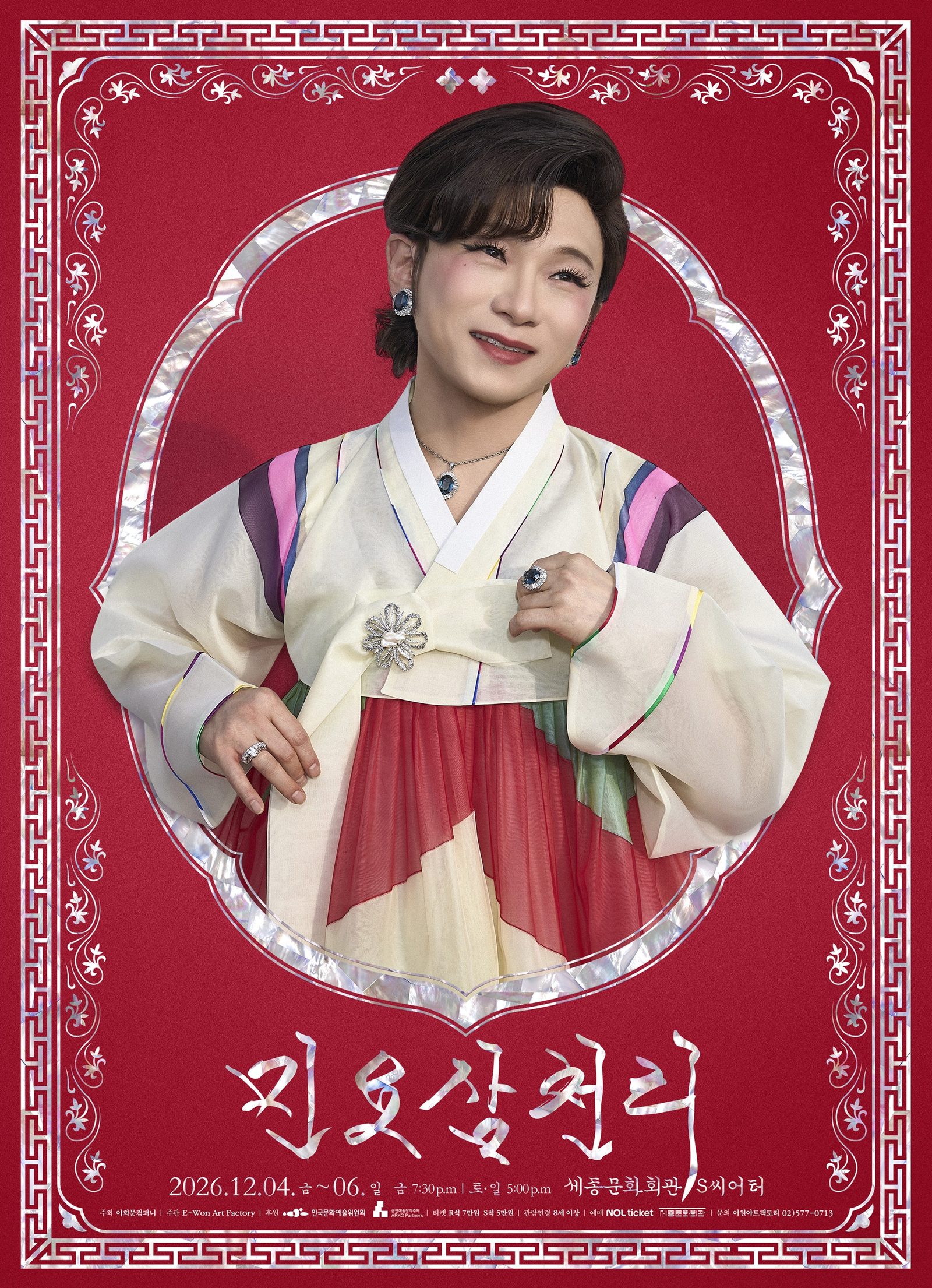
- Gyeonggi minyo and the lives of female sorikkun in modern times. This part illustrates Lee’s journey as a male sorikkun who had to learn, with his body, the texture and techniques of the peculiar sounds of traditional music that were optimized to a woman’s physique. Also featured are the lives of female performers who championed the tradition. The performance starts from the doubts Lee had as a male sorikkun and looks back on the roots and history of the feminized Gyeonggi minyo.
"Where did this sound I learned come from?" Minyo Samcheonri starts with this simple question, retracing the history of Gyeonggi Minyo—a genre we have long taken for granted as "tradition."
It follows the lives and songs of celebrated female vocalists who once dominated their era, the transformations Gyeonggi Minyo underwent amidst the waves of modernization, and the male vocalists who fought to forge their own space within that history.
Following the life of his mother—Gyeonggi Minyo master singer Go Ju-rang—Lee Hee-moon freely traverses the eras shaped by these legendary artists. On stage, individual lives turn into songs, and those very songs weave together to form the tradition we know today.
In 2026, Minyo Samcheonri returns to the stage. Lee Hee-moon steps into the shoes of his mother, Go Ju-rang, while Shin Seung-tae reprises his role as master singer An Bi-chwi. Reunited with the premiere's original cast, the production welcomes Lee Chae-hyun to bring fresh vitality to the show. Infused with contemporary flair, their honed ensemble work delightfully and cheekily unveils what lies beneath the surface of familiar "tradition."
Was the folk music we know really like this from the very beginning? A story of people who sang as they were and lived as they sang. Lee Hee-moon's Minyo Samcheonri begins once more.